 RU
RU
 DE
DE
 FR
FR
 ES
ES
 PT
PT
 AR
AR

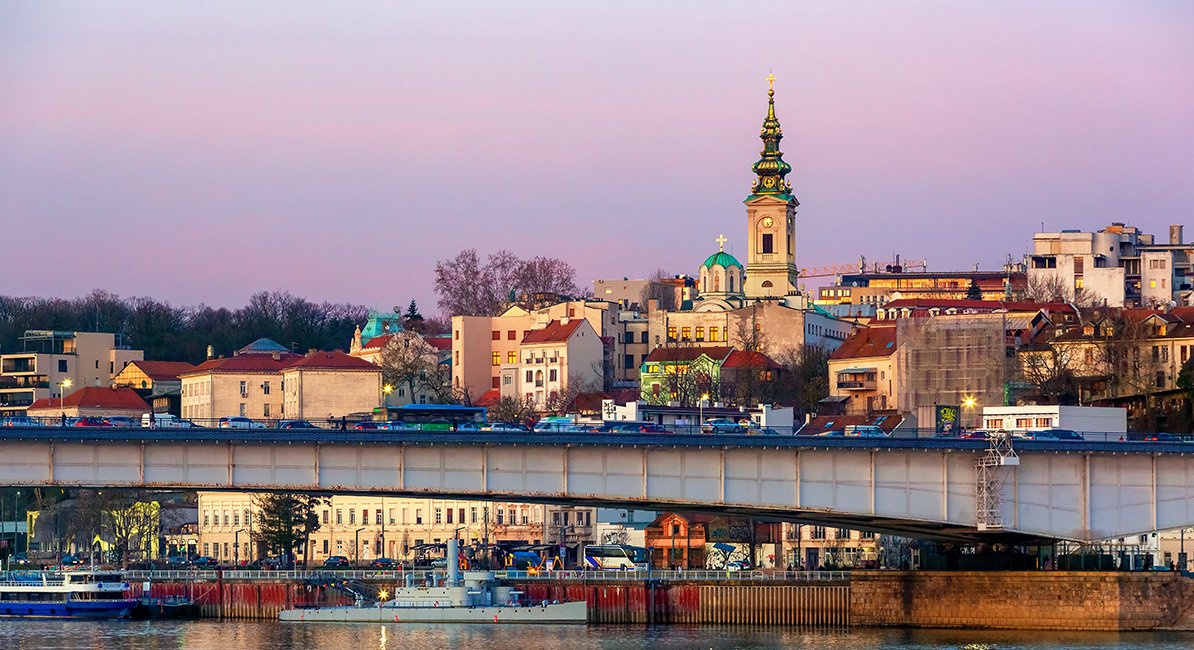
Foreigners can obtain a residence permit in Serbia for up to one year, with the possibility of an extension. Depending on citizenship, they can stay in the country visa-free for 30 to 90 days, after which a long-term residence permit will be required.
Expats have several grounds for legalisation, including investments in local businesses and purchasing a house or apartment in Serbia. An important feature of the programmes is the absence of a minimum investment threshold, although investors in an existing company will need at least EUR 50,000 in their account.
The Republic of Serbia has candidate status for European Union membership. EU membership will provide residents access to the largest business market and allow free travel within the Schengen Zone, making the country even more attractive for relocation and investment.
Content
Benefits of a Serbian Residence Permit
Residency offers foreigners more than just the right to live in the country: it also makes provision for the following:
- application for permanent residency or citizenship after three years of residence;
- obtaining a European-format driver's license and local vehicle registration;
- receiving free services in public healthcare institutions with insurance;
- sending children to kindergartens and schools for free;
- opening accounts, applying for loans and accessing other services at local banks.
How to get a residence permit in Serbia

| Type of Residence Permit | Duration |
|---|---|
| For investments | Six months |
| For property purchase | One year |
| Through employment | One year |
| For schoolchildren and students | One year |
| For scientific research | Up to one year |
| For humanitarian stay | From six months to one year |
Business-based Residency in Serbia
Those planning to establish a new business in the country or acquire a local company may apply for boravak. This option appeals to citizens of countries with double taxation agreements with Serbia. One of the main requirements is the employment of at least four Serbian citizens, along with subsequent contributions to the healthcare and pension funds.
To register as a sole proprietor, the applicant must open a bank account, establish an organisation through the Serbian Business Registers Agency and obtain a PIB (similar to a tax ID number). They must then notify the tax authority, pension fund and social security fund of their registration.
Serbia residence permit by investment
Foreign nationals may obtain an investor’s residence permit in Serbia in exchange for capital investments in a business registered there. They must provide a bank statement showing a minimum balance of EUR 50,000. The first boravak granted on this basis is valid for six months. A resident may renew their status by submitting an application and making additional investments of at least EUR 5,000 into the company’s capital.
Properties for sale in Serbia
 Status Nekretnine
Residence permit in Serbia through real estate investments
Purchasing apartments or villas in Serbia is a basis for obtaining boravak and then citizenship by investment in Serbia. The property value does not matter, as Serbian law does not set a minimum investment threshold. However, the purchased property cannot be rented out; the resident must live in it full-time and may be subject to inspections by agencies overseeing foreign nationals.
Before concluding the purchase, a foreigner must obtain the necessary approval from the cadastral office, which takes up to two months. The investor's spouse and minor children can also apply for residency. Residency granted based on real estate investment is valid for one year.
| Minimum investment threshold | – |
|---|---|
| Residence permit duration | One year |
| Restrictions | Rental prohibition |
| Requirements | Mandatory residence |
Serbia residence permit through employment
Individuals officially employed by a local organisation may apply for boravak. To be eligible for a position in Serbia, a foreigner must first obtain the necessary permit from the National Employment Service (the employer can also arrange this). An employment contract must be provided along with the application and standard set of documents. The maximum residency period on this basis is one year, with the option to renew.
Choosing the Basis for Obtaining a residence certificate in Serbia
When selecting the grounds to move to Serbia, factors such as the applicant's country of origin, financial situation and intended length of stay should be considered. For example, individuals planning to reside in Serbia long-term often obtain boravak through property purchase, business registration, or family reunification, as this permit is issued for one year and can be renewed an unlimited amount of times.
Requirements for Obtaining a Serbian residence permit
To get a residence permit in Serbia, a foreign national must meet the following requirements:
- be of legal age;
- have financial stability;
- possess a health insurance policy;
- own or rent residential real estate in Serbia;
- have no criminal record;
- have a valid basis for obtaining boravak;
- be ready to pay the state fee.
Documents to obtain a residence permit in Serbia
The standard set of documents includes the following:
- A valid passport
- Complete application form
- Proof of financial stability, such as a bank statement
- Color photos (3.5 x 4.5 cm)
- Registration at the place of residence within the republic (“white card”)
- Health insurance policy for the duration of the stay
- Receipt for payment of the state fee
- Certificate of no criminal record
- Proof of the basis for obtaining residency
All documents must be translated into Serbian and certified with an apostille.
Other Grounds for Obtaining Residency
"The most common grounds for obtaining boravak were listed above. However, several other options allow foreigners to apply for residency. These include more individualized cases, such as religious or scientific research activities, enrollment in a local educational institution, marriage to a citizen of the republic or participation in sports training and competitions," explains Stanislav Fil.
Ancestry
To obtain residency based on ancestry, one must prove Serbian heritage within Serbia or other former Yugoslav republics. This requires documentary evidence of family ties, such as a birth certificate or a relative's passport. Applicants may also submit a baptism certificate from the Serbian Orthodox Church.
Serbia residence permit through marriage
A foreigner married to a Serbian citizen may apply for boravak. When choosing this option, the required documents include a marriage certificate, proof of the spouse's citizenship, and evidence that the relationship is genuine. Those who have been married for more than three years can directly apply for permanent residency. Along with the spouse, their minor children may also apply for boravak.
Enrollment in a School or University
Residency is available for those enrolled in primary, secondary or higher education in the country and those studying the Serbian language in specialised courses. The application form must be accompanied by documents proving enrollment in a local educational institution. A minor foreign national must have a sponsor in Serbia responsible for providing housing and living expenses. Parental or guardian consent is also required.
The boravak for university students and international exchange programme participants is valid for one year, with the possibility of renewal. If the course duration is shorter than one year, the permit will match that period.
Science and Research
Foreign nationals planning to engage in research, educational projects or similar activities in Serbia may apply for boravak. Their documentation must include a contract with a local organisation that confirms the grounds for staying in the country. The duration of residency in this category corresponds to the length of the programme but cannot exceed one year. If the research objectives are not completed within that time, the foreigner may apply for an extension.
Volunteer Work
Participants in a volunteer programme in Serbia can apply for boravak by signing an agreement with the organising company. If a foreigner wishes to launch their own volunteer initiative instead of working within an existing programme, they must undergo state accreditation to be added to the registry of volunteer activities.
Professional Sports
Professional athletes visiting the republic for competitions or training can apply for residency by providing documents that confirm their status and purpose of stay. They must first sign a contract with a local sports club and obtain the appropriate permit. To establish their own club, they must secure a registration certificate.
Journalism
Journalists can apply for residency if they have accreditation issued by the Ministry of Culture and Information. The residency will allow them to live and work in the republic. To obtain this status, they must provide evidence of employment with local or international media outlets, as well as documents confirming their journalistic activities, such as publications, articles or reports. Additionally, they will need to arrange medical insurance and register their place of residence.
Caregiving for Relatives
Foreigners who come to the country to care for sick relatives or acquaintances can also apply for residency. To do so, they need to provide medical certificates confirming that the inviting party genuinely requires care, as well as permission from the relevant social institutions.
Religious Activities
The country offers a special residency category for clergy and representatives of foreign religious organisations. Applicants can legalise their stay by providing an employment contract or a document proving their engagement with a religious organisation, such as an invitation to serve from a Serbian religious community.
Humanitarian Stay
This status is available to individuals facing difficult life circumstances. Foreign nationals may legalise their stay in Serbia if they:
- are victims of serious crimes;
- seek to delay deportation;
- have fled their home country due to persecution based on religion, nationality or other grounds;
- are victims of human trafficking and are willing to cooperate with the authorised state bodies.
The validity period for this category of residence permit ranges from six to 12 months. The foreigner has the right to extend the document if they have valid grounds for doing so. It is also possible to apply for a residence permit on other humanitarian grounds, but only if these do not contradict the interests and international obligations of the republic.
Step-by-step process of obtaining a residence permit in Serbia
The procedure for acquiring a residency permit consists of the following steps:
- Obtaining a Visa: To enter the country for relocation, a foreign national must secure a national entry permit— otherwise known as a long-term D visa. This requirement is waived for citizens of countries with a visa-free agreement with Serbia. Those entering on a short-term visa may apply for residency only in exceptional cases.
- Registering a Place of Residence: Upon arrival in Serbia, a foreigner must obtain a “white card”—a certificate of residence registration. To do this, the foreign national should go to a police station and present a rental contract or a purchase agreement for housing within the country.
- Preparing Documents: Next, the applicant must gather the full set of required documents and fill out the application form, providing complete information, including personal details, immigration purposes and intended length of stay. The grounds for the entry permit and the residency status must be consistent.
- Submitting the Application: The applicant personally submits the prepared set of documents to the Foreigners Office at their registered location in Serbia or to the police station in the capital. The application is processed within 30 days of submission.
- Receiving the Boravak: If the application is approved, the applicant will receive their passport with the residency permit attached.
The Most Popular Way to Obtain Residency
Obtaining boravak through purchasing houses or apartments in Serbia is one of the most common ways to gain legal residency. This option is ideal for expats who wish to relocate to Serbia permanently, as it allows them to secure housing immediately. An added benefit is the absence of a minimum investment threshold, which is common in many other countries.
Serbia offers a broad selection of residential properties, including both new constructions and existing homes. Compared to other European countries, foreign buyers are drawn to Serbia due to its relatively affordable real estate prices. New developments often meet high-quality standards, are strategically located in areas with developed infrastructure and provide amenities such as pools, sports facilities and children’s play areas. Many buildings also offer 24/7 security and concierge services.
Reasons for Residency Application Rejection
The most common reasons for rejecting a residency application include:
- an incomplete set of documents;
- fake documents;
- providing false information;
- lack of financial solvency;
- absence of health insurance;
- lack of housing in Serbia;
- absence of a vaccination certificate (for individuals coming from epidemic-affected regions);
- lack of grounds for residency;
- violating Serbian law during the application review process;
- an existing entry ban or deportation order.
First of all, the applicant needs to identify the reason for the refusal to determine the appropriate actions. It is then recommended to consult lawyers specialising in migration law. Professionals will assist in appealing the decision in court or suggest alternative options.
Any type of residence permit in Serbia will become invalid if the resident stays outside the republic for more than half of the permit’s validity period. The residence permit may also be cancelled if it is found that it was issued on unlawful grounds, if visa conditions are violated (e.g., working without a work permit) or if the application for extension is not submitted in time.
Timeline and Cost of Obtaining Residency
The cost of boravak depends on the grounds upon which it is granted. Almost every applicant will face expenses for government fees (starting from EUR 153), legal or agency services, health insurance, document translation and apostille, housing purchase or rental and other related costs.
The process typically takes around two months. The duration depends on the applicant's circumstances, the completeness of their documents and the workload of the immigration office. In most cases, the maximum timeframe does not exceed six months.
Extending Residency in Serbia
If there is a legal basis for continued stay in the republic and the foreigner complies with local immigration laws, they may renew a residence permit in Serbia. The renewal application must be submitted no later than 30 days before the expiration of the first permit. In some cases, a personal interview or additional documents may be required.
How to obtain Serbian citizenship
After three years of residency, a foreign national can apply for citizenship in Serbia, provided they meet the requirements for time spent within the country. They are permitted to be abroad for no more than six consecutive months or a total of 10 months. After obtaining permanent residence, an individual may apply for citizenship status.
In 2024, the republic introduced important changes to its citizenship process. Now, applicants can receive a Serbian passport immediately after obtaining permanent residency—after just three years of living there. The applicant must be of legal age, demonstrate proof of employment or business ownership and either own or hold a long-term lease on a residential property. Another requirement is a formal declaration that their primary place of residence and life interests are within the country.
FAQ
The applicant should be prepared for expenses related to purchasing or renting housing, state fees, legal or agency services, medical insurance and the translation and notarisation of documents.
The applicant must provide a completed application form, a valid foreign passport, a bank statement, photographs, proof of residence registration, medical insurance, a criminal record certificate and other documents.
In most cases, the processing takes about two months.
Yes, purchasing real estate of any value can serve as a basis for issuing a residence permit.
Yes, the spouse and close relatives of the main applicant may apply for residency status.
Renewal is mandatory for those who wish to maintain their residency status.
Yes, Serbian law permits dual citizenship.
Typically, the residence permit is issued for one year.
A foreign national can appeal the decision in court.
After three years of residence in the country, a resident can apply for permanent residency and get a passport in Serbia.
Yes, the applicant’s spouse and close family members are eligible for residency.
Most of the application process can be completed remotely, but the applicant must visit Serbia in person to submit documents.
Comments